
The 8th pay commission salary is one of the most searched topics among central government employees in India. With inflation steadily increasing and household expenses rising across urban and rural areas, employees are keen to understand how the next pay revision could impact their income.
While the government has not yet officially announced the implementation of the 8th Pay Commission, discussions and expectations continue to grow. Salary revision under a pay commission is not just about a hike — it reshapes the entire compensation structure, including allowances, pension, increments, and long-term financial planning.
This comprehensive guide explains everything you need to know about the expected 8th Pay Commission salary structure in simple and practical terms.
What Is 8th Pay Commission Salary?
The 8th Pay Commission salary refers to the revised pay structure that will replace the current salary system under the 7th Pay Commission for central government employees.
It will determine:
- New basic pay
- Pay matrix levels
- Allowance structure
- Pension formula
- Fitment factor
- Annual increment structure
The salary revision typically applies to:
- Central government employees
- Defense personnel
- Certain autonomous bodies (if adopted)
- Pensioners
Why Salary Revision Is Necessary
Salary revision becomes essential when inflation reduces purchasing power.
Major Reasons for Salary Revision
- Rising cost of living
- Increased housing expenses
- Higher medical and education costs
- Economic changes over time
- Employee retention and motivation
Without periodic revision, real income gradually declines.
Expected 8th Pay Commission Salary Increase
Although final figures are not officially confirmed, estimates are based on historical trends.
Expected Salary Hike Range
- Overall increase may range between 20% to 35%
- Entry-level employees may receive proportionally higher benefit
- Mid-level employees may see balanced adjustments
- Senior officers may benefit through structured allowances
The exact hike will depend largely on the fitment factor and revised pay matrix.
Expected Minimum Salary Under 8th Pay Commission
The minimum salary is a key concern for lower-level employees.
Current Minimum Basic Pay
- ₹18,000 (under 7th Pay Commission)
Expected Minimum Basic Pay
- Likely to increase to ₹26,000–₹30,000
- Higher take-home pay after allowances
- Improved financial stability for Group C employees
This increase could significantly improve living standards for entry-level staff.
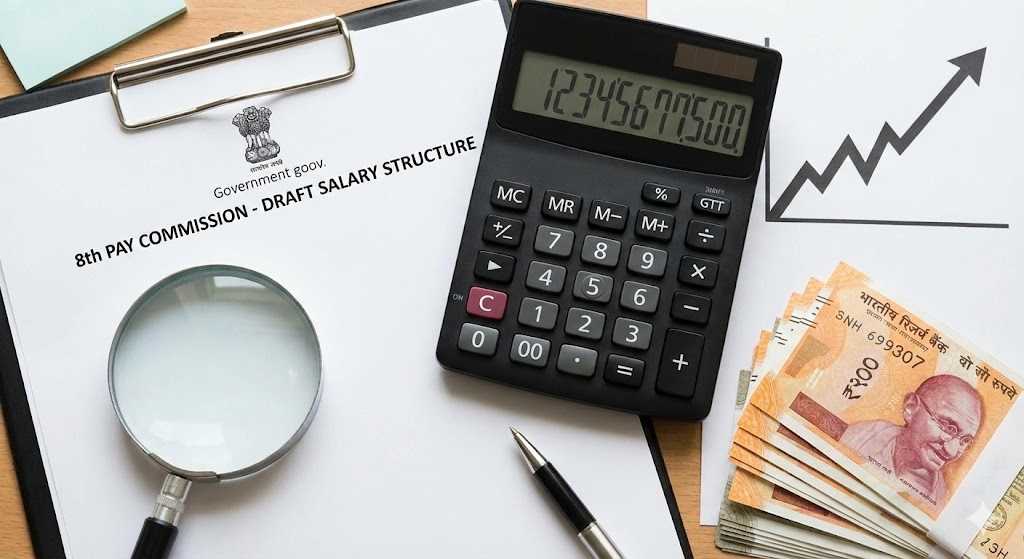
Understanding the Salary Structure
The salary structure under the 8th Pay Commission is expected to follow a revised pay matrix model.
Key Components of Salary
- Basic Pay
- Dearness Allowance (DA)
- House Rent Allowance (HRA)
- Transport Allowance
- Other special allowances
Basic pay forms the foundation for calculating all other components.
Fitment Factor and Its Impact on Salary
The fitment factor is the multiplier used to calculate the revised basic pay.
Expected Fitment Factor
- 7th Pay Commission: 2.57
- Expected under 8th Pay Commission: 3.0 to 3.5
Example Calculation
If current basic pay is ₹25,000
With fitment factor 3.2:
Revised Basic Pay = ₹80,000
Allowances calculated on this amount significantly increase total salary.
How 8th Pay Commission Salary Affects Different Pay Levels
Entry-Level Employees
- Improved starting salary
- Higher career growth potential
- Better annual increments
Mid-Level Employees
- Reduced stagnation
- Improved promotional pay structure
- Stronger retirement base
Senior Officers
- Revised maximum pay ceiling
- Balanced allowance rationalization
- Enhanced pension base
Allowances After Salary Revision
Allowances often contribute 30–40% of total salary.
Allowances Likely to Be Reviewed
- House Rent Allowance
- Transport Allowance
- Medical Allowance
- Children Education Allowance
- Special Area Allowances
Allowance restructuring can significantly affect take-home salary.
Dearness Allowance and Salary Reset
Dearness Allowance (DA) is periodically revised to offset inflation.
Possible Scenario
- DA may be merged into basic pay
- Fresh DA cycle may begin after implementation
- Salary growth may accelerate due to higher base
This reset is common during major pay revisions.
Impact on Pension and Retirement Salary
The 8th Pay Commission salary will directly impact pension calculations.
Benefits for Pensioners
- Higher minimum pension
- Revised pension formula
- Increased family pension
- Higher DA benefits on pension
Since pension is linked to last drawn salary, revision strengthens retirement income.
Economic Impact of Salary Increase
Salary revision affects not only employees but also the broader economy.
Positive Effects
- Increased consumer spending
- Higher demand in local markets
- Improved employee morale
- Enhanced productivity
Government Considerations
- Budget impact
- Fiscal discipline
- Inflation management
The government must balance employee welfare and economic sustainability.
Common Questions About 8th Pay Commission Salary
“Will salary double under 8th Pay Commission?”
Not necessarily. It depends on the final fitment factor and pay level.
“Will everyone get the same increase?”
No. Salary hike varies by pay level and designation.
“When will new salary be implemented?”
There is no confirmed implementation date yet.
How Employees Should Prepare
Instead of relying on speculation, employees should prepare wisely.
Smart Financial Steps
- Avoid unnecessary liabilities
- Strengthen long-term investments
- Review insurance and retirement plans
- Track official government announcements
Financial discipline ensures maximum benefit from salary revision.
Read Also : 8th Pay Commission Kab Lagu Hoga
Frequently Asked Questions (FAQs)
Is the 8th Pay Commission salary officially announced?
No official announcement has been made yet.
What is the expected salary increase?
Experts estimate between 20% and 35%.
Will pension increase with salary revision?
Yes, pension revision is typically included.
What is the expected minimum salary?
Likely between ₹26,000 and ₹30,000 basic pay.
Will allowances increase?
Most allowances are revised during pay commission implementation.
Final Conclusion
The 8th pay commission salary revision is expected to bring meaningful financial improvement for central government employees in India. While official confirmation is awaited, the need for salary restructuring is evident due to inflation and rising living costs.
Employees should stay informed, avoid misinformation, and prepare financially. When implemented responsibly, the 8th Pay Commission can enhance financial security, improve morale, and strengthen the overall compensation structure for government employees.